

If you’ve ever vacuumed a rug only to notice your constant wheezing and sneezing has only gotten worse, you already know why air purifiers have become one of the most-searched home appliances of the year. Between shedding pets, seasonal pollen, and the everyday dust that collects in every corner of a house, the air inside your home can carry a surprising amount of stuff you’d rather not be breathing. A good air purifier won’t replace vacuuming or dusting, but it will pull allergens, dander, and odors out of circulation while you go about your day.
Not every purifier is built for the same job, though. Some are optimized for enormous open-concept living rooms, others for a compact bedroom nightstand, and a few are engineered specifically around the unique mess that comes with living alongside a shedding, dander-producing pet. We researched a wide range of models to find the standouts in each category, so whether you’re dealing with a cat allergy, a golden retriever who sheds like it’s a competitive sport, or just chronic springtime sniffles, there’s a pick here built for your situation.
What to consider before buying an air purifier
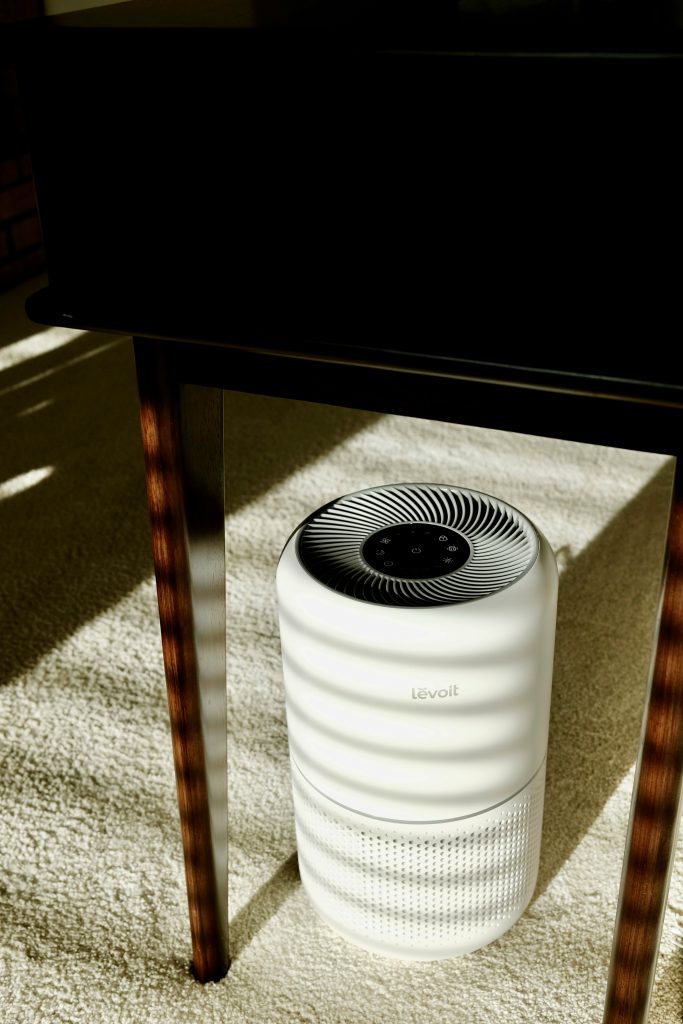

Photos by Fujiphilm (left) and Nubelson Fernandes (right) on Unsplash
Room Size & CADR: The single most important spec on any air purifier is its Clean Air Delivery Rate, or CADR, which tells you how much filtered air a unit can push out per minute for smoke, dust, and pollen. Manufacturers also publish a recommended square footage, but that number typically assumes just one air change per hour — for allergy relief, aim for a unit whose rated coverage area is at least double the size of your actual room, so it’s cycling air closer to 4-5 times per hour instead of just once.
Filter Type & Stages: True HEPA filtration is the gold standard for allergy and pet-dander control, capturing 99.97% of particles down to 0.3 microns. Most of today’s better purifiers pair that HEPA layer with a pre-filter (to catch large debris like pet hair before it clogs the main filter) and an activated carbon layer (to tackle odors and VOCs). If pet smell is as much of a concern as pet dander, prioritize a model with a genuinely substantial carbon layer, not just a thin liner.
Noise Level, Especially for Bedrooms: An air purifier only helps if you actually run it, and a unit that roars on its highest setting tends to get switched off or unplugged. Look at the low-speed or sleep-mode decibel rating specifically, since that’s the setting most people actually leave running overnight. Anything in the low-to-mid 20 dB range is genuinely bedroom-friendly.
Pet-Specific Features: Standard air purifiers treat pet dander like any other allergen, but a few models go further with wider air inlets designed to pull in loose fur without clogging, dedicated “Pet Mode” fan cycling, or pet-specific replacement filters with extra odor-absorbing carbon. If you’ve got a heavy shedder at home, these small design differences add up.
Smart Features & Filter Costs: App control, auto mode (which adjusts fan speed based on a built-in air quality sensor), and voice assistant compatibility are nice conveniences, but the real long-term cost of any purifier is its replacement filters. Factor in how often a filter needs replacing and what a replacement costs before you commit, since a cheaper unit with pricier filters can end up costing more over a year or two.
Now that you know what to look for, here are our top picks for the best air purifiers for pet owners and allergy sufferers.
Best Air Purifier: LG PuriCare 360
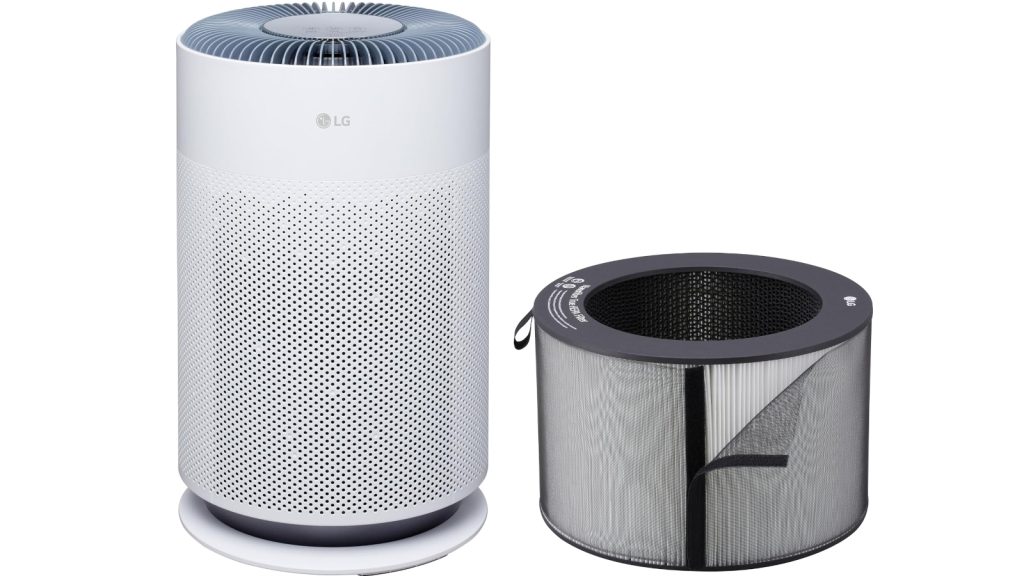
The LG PuriCare 360 earns our top overall spot by doing something most purifiers don’t even attempt: pulling air in from every direction instead of just the front or bottom. Its 360-degree intake design, borrowed from aircraft fan technology, pushes cleaned air low to the ground and evenly throughout the room rather than just directly in front of the unit, which matters if you’ve got pets or crawling kids spending time on the floor. The three-layer NanoFiber True HEPA filter captures 99.97% of particles as small as 0.3 microns, backed by a PM1.0 sensor that continuously reads air quality and adjusts fan speed automatically, with a color-coded light ring so you can see at a glance whether your air is clean or not. It’s also whisper-quiet, dropping as low as 23dB in sleep mode, and full ThinQ app and voice assistant support means you can check filter status or start a cycle before you even walk in the door.
- Our Verdict: The PuriCare 360 blends genuinely useful engineering (that 360-degree intake is a real differentiator) with the smart features and quiet operation that make a purifier easy to actually live with day to day.
- Pros: True HEPA + carbon filtration captures dander and odors, 360-degree intake improves air mixing throughout the room, whisper-quiet down to 23dB, smart PM1.0 sensor with auto mode and app control
- Cons: Premium price relative to similarly-rated competitors; replacement filters aren’t the cheapest in the category
Best Coverage: BLUEAIR Blue Signature Air Purifier
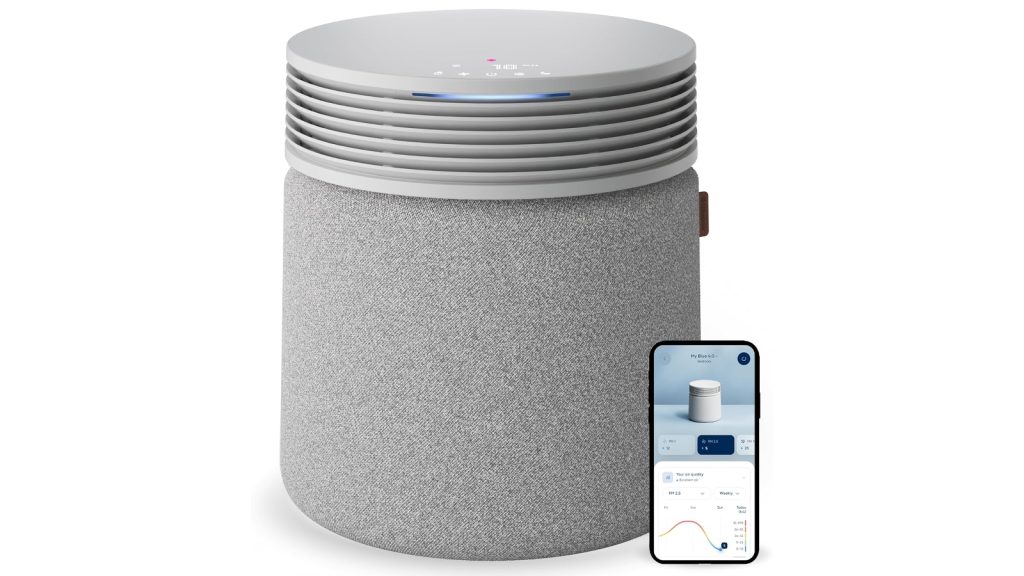
If you’re trying to cover an open-concept living room, finished basement, or a home with a lot of square footage between you and your allergy triggers, the Blue Signature is the pick built for the job. Blueair rates it to fully purify spaces up to 705 square feet in about 12.5 minutes, and to cycle air through rooms as large as 3,385 square feet within an hour, backed by genuinely high CADR numbers across smoke, dust, and pollen. That performance comes from a seven-stage HEPASilent filtration system that combines mechanical HEPA filtration with electrostatic charging, plus a dedicated OdorFence layer built specifically to break down pet and cooking odors rather than just mask them. It also happens to look nothing like a typical air purifier — its low, cylindrical shape doubles as a side table or ottoman, with a swappable fabric pre-filter available in multiple colors so it can actually match your room instead of standing out in it.
- Our Verdict: For large or open-plan spaces where a typical tower purifier would be overwhelmed, the Blue Signature delivers real coverage without turning your living room into a hospital waiting area.
- Pros: Exceptional coverage for large rooms, strong dedicated odor-fighting layer beyond standard carbon filtration, doubles as furniture with a customizable fabric exterior, very low power draw for its performance class
- Cons: Gets noticeably louder at its top fan speed than some competitors; premium price tag plus optional accessories add up quickly
Great Choice: LEVOIT Air Purifier Core300-P
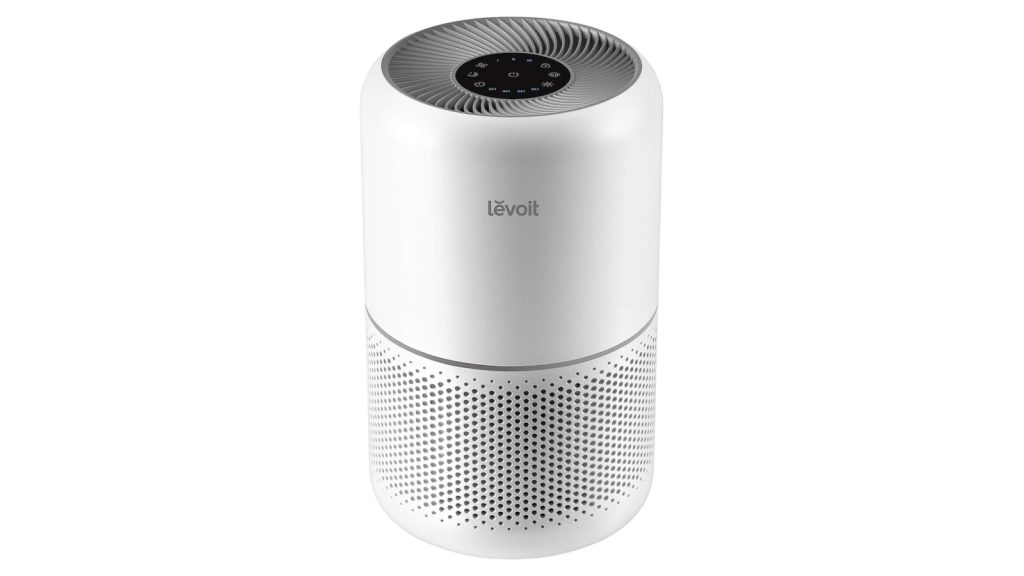
The Core300-P has built a loyal following for good reason: it delivers real, AHAM-verified HEPA performance at a price point that doesn’t require a second thought. Its 3-in-1 filter system pairs a fine-mesh pre-filter with a True HEPA layer and an activated carbon filter, capturing 99.97% of particles between 0.1 and 0.3 microns, including pollen, dust, and pet dander. Levoit also sells a dedicated Pet Allergy replacement filter with extra odor-adsorbing material, so owners can tailor the unit specifically to a multi-pet household without buying a different purifier. Coverage is rated for rooms up to roughly 1,073 square feet on a single pass, and the fan drops to a genuinely quiet 24dB in sleep mode, which is where a purifier at this price point often disappoints.
- Our Verdict: If you want dependable, no-nonsense HEPA filtration for a bedroom or living room without paying for a lot of smart-home bells and whistles, the Core300-P remains one of the best values in the category.
- Pros: Strong CADR-to-price ratio, dedicated Pet Allergy replacement filter option, quiet 24dB sleep mode, simple manual controls that don’t require an app
- Cons: Base Core300-P model lacks auto mode and app connectivity (only the “S” variant offers smart features); coverage area shrinks quickly if you want multiple air changes per hour
Great for Pet Owners: LEVOIT Vital 200S-P
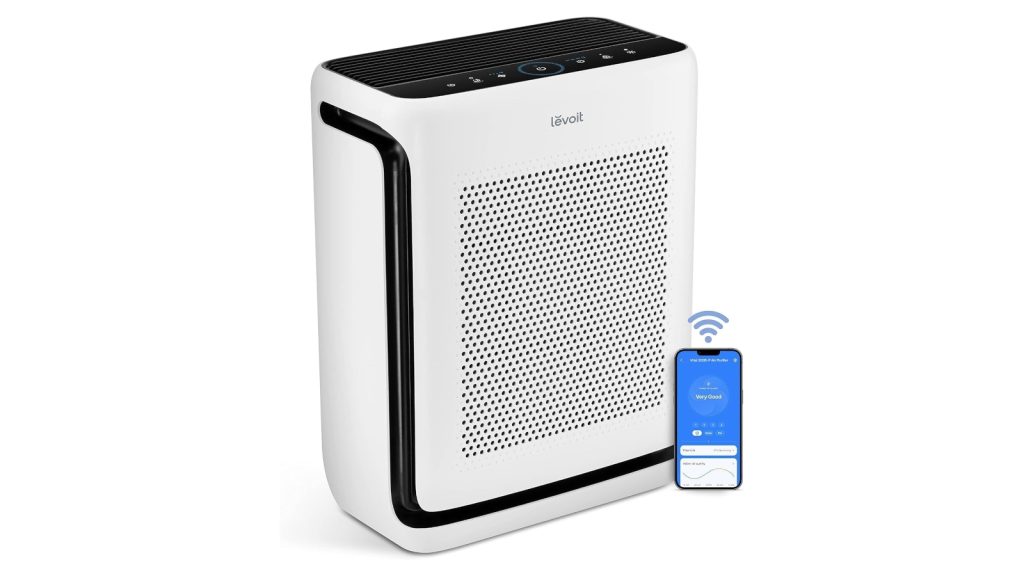
The Vital 200S-P is Levoit’s purifier built specifically around the reality of living with pets. Instead of a single circular intake, it uses a wider, U-shaped air inlet designed to pull in loose fur and heavy dander without clogging as quickly as a standard mesh pre-filter, and a dedicated Pet Mode automatically alternates between high and medium fan speeds to stay ahead of shedding while conserving energy when things settle down. Underneath, the same 3-stage system (washable pre-filter, HEPA-grade main filter, and high-efficiency activated carbon) captures at least 99.97% of particles down to 0.3 microns, with strong AHAM-verified CADR ratings across dust, smoke, and pollen. An infrared dust sensor feeds real-time air quality data to both the unit’s display and the VeSync app, and QuietKEAP technology keeps things down to 23dB when you need it to stay unobtrusive.
- Our Verdict: For homes where pet hair and dander are the primary concern rather than an afterthought, the Vital 200S-P’s wider intake and dedicated Pet Mode make a genuine, practical difference.
- Pros: Wide U-shaped inlet specifically designed for pet fur, automatic Pet Mode fan cycling, washable pre-filter extends filter life, real-time air quality display and app monitoring
- Cons: Bonded filter design means replacing the carbon layer means replacing the whole filter cartridge; odor control is solid but not class-leading for very strong pet smells
Great for Bedroom Allergies: Honeywell Allergen Plus Compact Small Room HEPA Air Purifier
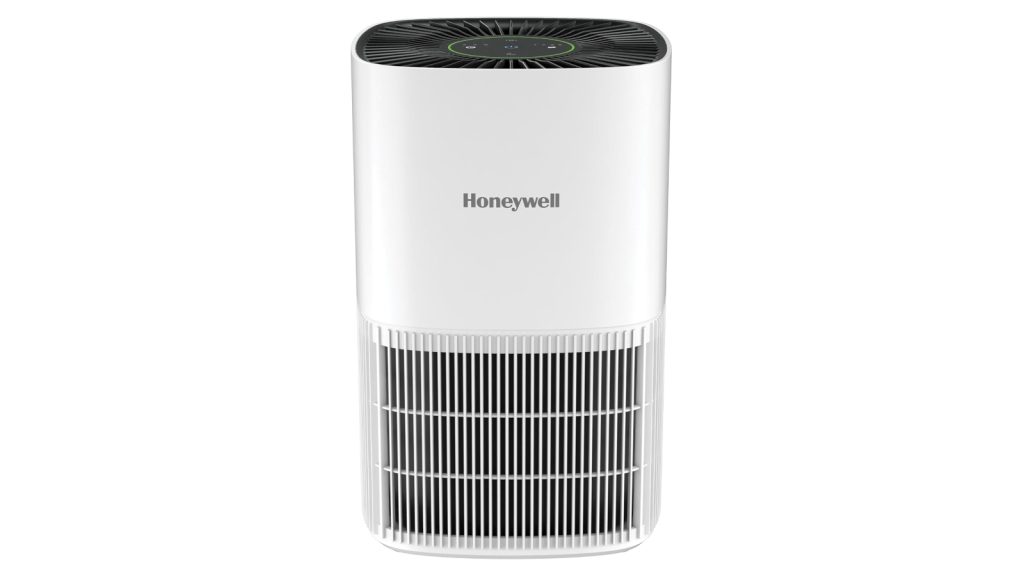
Not every allergy sufferer needs to cover a great room — plenty of people just want cleaner air on the nightstand while they sleep, and that’s exactly where the Honeywell Allergen Plus Compact shines. Its tabletop footprint is small enough for a dorm room or bedside table, but the 360-degree 3-in-1 HEPA filtration still captures up to 99.97% of dust, pollen, pet dander, and smoke, with a built-in activated carbon layer for everyday odors. AQSense Auto Mode uses a built-in air quality sensor to adjust fan speed on its own, with a simple green/yellow/red indicator so you always know where your air quality stands. True to its bedroom-first design, Sleep Mode brings noise down to as low as 20.81 dBA with dimmable lights, and it’s AHAM Verifide to cycle a 110-square-foot room up to 4.8 times an hour, which is the kind of frequent air exchange that actually makes a dent in allergy symptoms overnight.
- Our Verdict: For a single bedroom, nursery, or dorm room where quiet, consistent HEPA filtration matters more than square footage, this compact Honeywell is hard to beat for the price.
- Pros: Genuinely whisper-quiet sleep mode at 20.81 dBA, compact footprint fits nightstands and small desks, AQSense auto mode adjusts fan speed automatically, AHAM Verifide performance you can trust
- Cons: Small-room design means it’s not a fit for larger bedrooms or open spaces; no app or smart home connectivity
Frequently Asked Questions About Air Purifiers for Pets and Allergies

Do air purifiers actually help with pet allergies?
Yes, though it’s worth understanding what they can and can’t do. Pet allergens are mostly carried on dander, tiny flecks of skin that pets shed constantly, along with saliva proteins that dry and become airborne. A True HEPA air purifier captures these particles as air passes through the filter, which reduces the overall allergen load floating around your home. It won’t eliminate allergens that have already settled into carpets, upholstery, or bedding, so pairing a purifier with regular vacuuming (ideally with a HEPA-filtered vacuum) and washing pet bedding gives you the best real-world results.
How many air purifiers do I need for my house?
Air purifiers are generally most effective when treated as single-room devices rather than whole-house solutions, since air doesn’t circulate freely between closed rooms. Most households do best with one purifier in the bedroom, since that’s where you spend the most consecutive hours breathing the same air, and a second unit in whatever common space sees the most pet activity or foot traffic. Trying to cover an entire home with one central unit generally requires a far larger, more expensive purifier than most people realize, and even then, doors and hallways limit how well air actually mixes between rooms.
What’s the difference between “True HEPA” and just “HEPA-type” or “HEPA-like” filters?
This distinction matters more than most shoppers realize. True HEPA filters meet a specific, tested standard: capturing 99.97% of particles 0.3 microns or larger. Terms like “HEPA-type,” “HEPA-like,” or “99% HEPA” are marketing language, not a certified standard, and those filters can perform significantly worse at capturing the fine particles that trigger allergies. When comparing purifiers, look specifically for “True HEPA” in the spec sheet, and ideally AHAM Verifide certification, which means the unit’s performance claims were independently tested rather than self-reported by the manufacturer.
How often do I need to replace the filters, and does it matter for allergies specifically?
Most manufacturers recommend replacing HEPA filters every 6 to 12 months, though homes with pets or heavy allergy triggers often need replacements on the shorter end of that range since the filter is capturing more material more quickly. A clogged filter doesn’t just stop improving your air quality, it can restrict airflow so much that the purifier becomes measurably less effective, even though it’s still running. Most units include a filter-change indicator light to take the guesswork out of it, but if you have multiple pets or run the purifier on high most of the day, it’s worth checking the filter visually every few months regardless of what the indicator says.
Should I run my air purifier all the time, or only when allergies flare up?
For the best results, air purifiers are designed to run continuously rather than in short bursts. Allergens are constantly being reintroduced into household air through pet movement, opening doors and windows, and everyday activity, so a purifier that’s only turned on occasionally is playing catch-up rather than maintaining consistently clean air. Most modern units, especially those with auto or sleep modes, are efficient enough to run 24/7 without a significant impact on your electric bill, and continuous operation is generally what allows allergy sufferers to notice a real difference in symptoms over time.
Can an air purifier help with pet odor, not just allergens?
Partially. HEPA filters are designed to capture solid particles, not gases or odor molecules, which is why odor control comes down almost entirely to a purifier’s activated carbon layer. A thin or minimal carbon layer will do little against persistent pet smell, while a purifier with a substantial carbon filter, or a dedicated odor-fighting technology, can make a real difference on everyday smells. That said, no air purifier is a substitute for regular cleaning, litter box maintenance, or bathing pets when odor is a significant issue, since a purifier can only treat air that’s already circulating past it.