
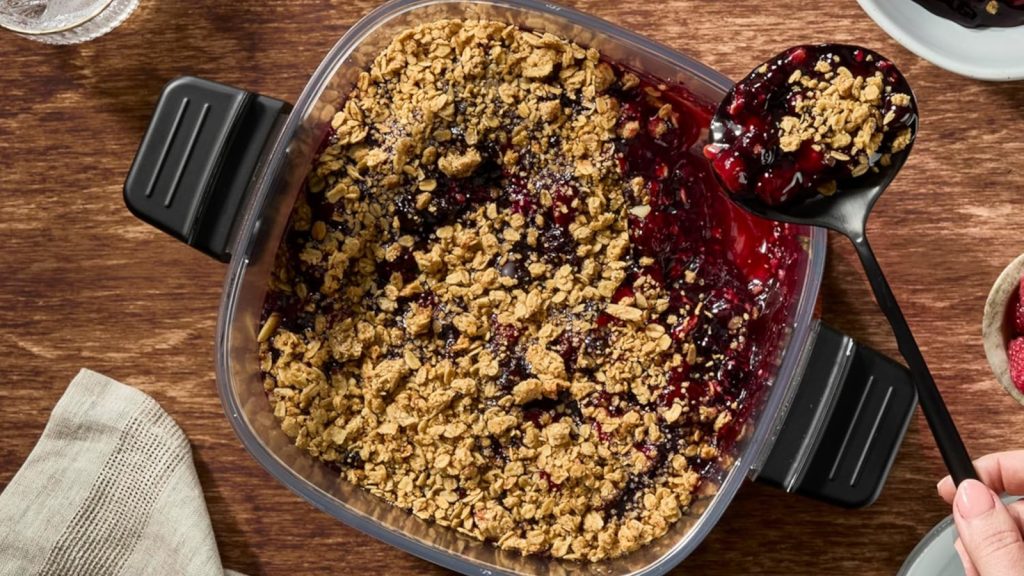
Air fryers have been a countertop mainstay for years now, even challenging kitchen staples like coffee makers, but 2026 has brought a genuine shake-up to the category: glass. Instead of the usual opaque nonstick basket, newer models swap in a see-through glass bowl, so you can actually watch your fries crisp up or your chicken thighs brown without cracking the lid and losing heat. The appeal goes beyond the novelty of watching your dinner cook, too.
Many glass baskets skip the PTFE and PFAS coatings found in traditional nonstick baskets; they tend to go straight from fridge to fryer to table without dish-swapping, and they’re almost always dishwasher-safe. Of course, not every glass air fryer is built for the same job — some are designed for solo meals, others for Sunday-dinner-sized spreads. This guide will help you figure out which glass air fryer fits your kitchen and your cooking habits.
What to consider before buying a glass air fryer
Capacity & Household Size: Glass air fryers span a huge range, from single-serving glass containers around 4 quarts to family-sized bowls topping out at 16 quarts or more. Cooking for one or two? A compact model saves counter space and preheats faster. Feeding a family or hosting often? Look for something in the 9- to 16-quart range so you’re not cooking in shifts.
Wattage & Temperature Range: Wattage affects how quickly a unit heats up and how well it recovers heat once you open it, while the top-end temperature determines how hard you can crisp things like wings or fries. Most glass air fryers land between 1200 and 1800 watts and top out somewhere between 390°F and 450°F. If you frequently cook proteins that benefit from a hard sear, lean toward the higher end of both ranges.
Cooking Functions: Nearly all of today’s glass air fryers do more than just air fry. Look for extras like bake, broil, roast, dehydrate, reheat/recrisp, or rotisserie if you want one appliance to replace several. A recrisp or reheat setting is especially handy for bringing leftovers back to life without the sogginess of a microwave.
Cleaning & Care: One of the best arguments for going glass is cleanup. Most glass baskets are dishwasher safe, and some models include a self-cleaning cycle that circulates soapy water through the bowl for you. That said, a few larger glass bowls are hand-wash only, so it’s worth double-checking before you buy.
Material Safety: If avoiding PTFE, PFAS, and other nonstick chemical coatings is a priority, glass air fryers are a natural fit — most brands market their glass baskets specifically as PFAS-free or “non-toxic.” Just note that some models still use ceramic or ceramic-coated crisper plates alongside the glass bowl, so read the fine print if you want an entirely coating-free setup.
Now that you know what to look for, here are our top picks for the best glass air fryers of 2026.
Best Overall: Cuisinart ClearView 4-Quart Glass Basket Air Fryer (AFC-4)
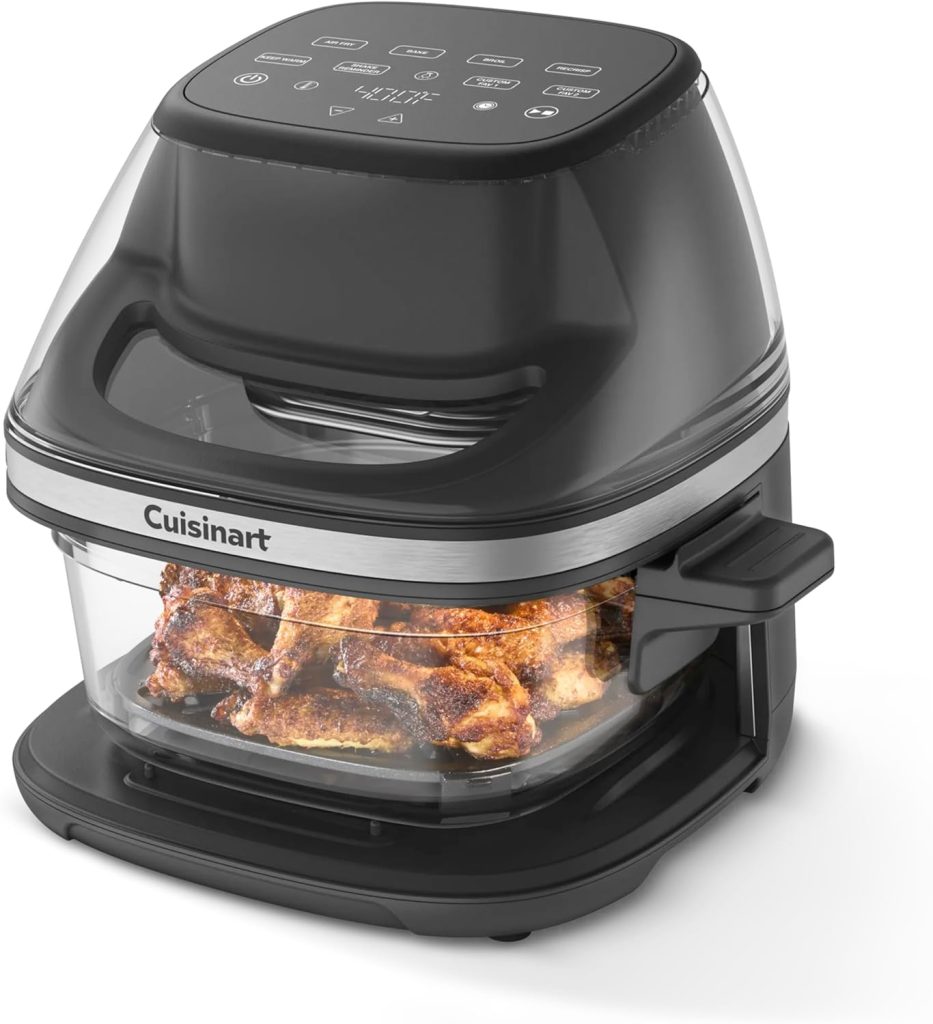
Cuisinart’s ClearView lineup is one of the buzziest launches in the category this year, and the 4-quart AFC-4 earns its spot as our top overall pick by nailing the fundamentals. The transparent glass basket and top viewing window let you monitor browning from every angle, complete with an interior light so you’re not squinting into the dark. It’s rated for 1600 watts and adjustable temperatures up to 450°F in precise 5-degree increments, giving you real control over crispness rather than a handful of vague presets. Beyond air frying, it handles bake, broil, recrisp, and keep-warm duty, plus two custom presets for your go-to meals. The basket itself is designed to move from prep to cook to table to fridge without a single dish swap, and the whole thing is backed by a 3-year warranty — a longer commitment than most of the competition offers.
- Our Verdict: For most households, this is the glass air fryer to beat in 2026 — it balances performance, visibility, and everyday usability better than anything else we tested at this size.
- Pros: Excellent temperature precision, sturdy prep-to-serve glass basket, interior light for real-time monitoring, unusually long 3-year warranty
- Cons: 4-quart capacity is better suited to 1-3 people than a full family; glass basket isn’t microwave-safe
Solid Choice: Ninja Crispi 4-in-1 Glass Air Fryer (FN101SG)
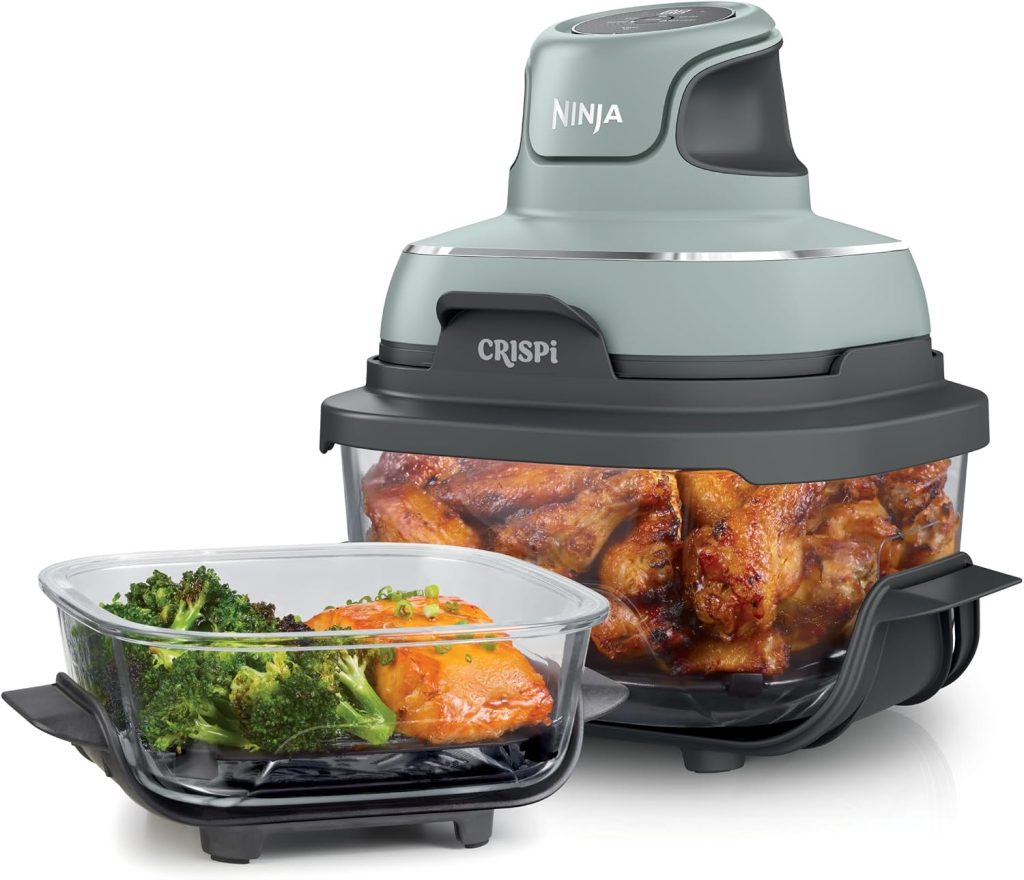
The Ninja Crispi takes a genuinely different approach to the glass air fryer category: instead of one fixed basket, it’s a compact “PowerPod” that clips onto separate borosilicate glass containers — a 6-cup size for personal meals and a 4-quart size for family portions. That modularity means the actual footprint on your counter can be as small as the pod itself when you’re not cooking, and both containers are microwave, freezer, and dishwasher safe, which is rare for this category. At 1500 watts and up to 450°F, it handles Max Crisp, Air Fry, Bake, and Recrisp modes, and Ninja says the 6-cup container can crisp a personal meal in as little as 7 minutes. The containers also double as storage vessels with included snap-lock lids, so leftovers go straight from the fryer to the fridge.
- Pros: Genuinely space-saving pod design, containers are microwave- and freezer-safe (not just dishwasher-safe), fast cook times for small portions, PFAS/PTFE-free glassware
- Cons: The 4-quart container is the largest size offered here, so it’s not the pick for big households; buying extra containers adds to the overall cost
- Our Verdict: If counter space and flexibility matter more to you than sheer capacity, the Crispi’s swappable-container system is hard to beat — just don’t expect it to feed a crowd.
Best Value: NutriChef 5.8-Quart Transparent Air Fryer
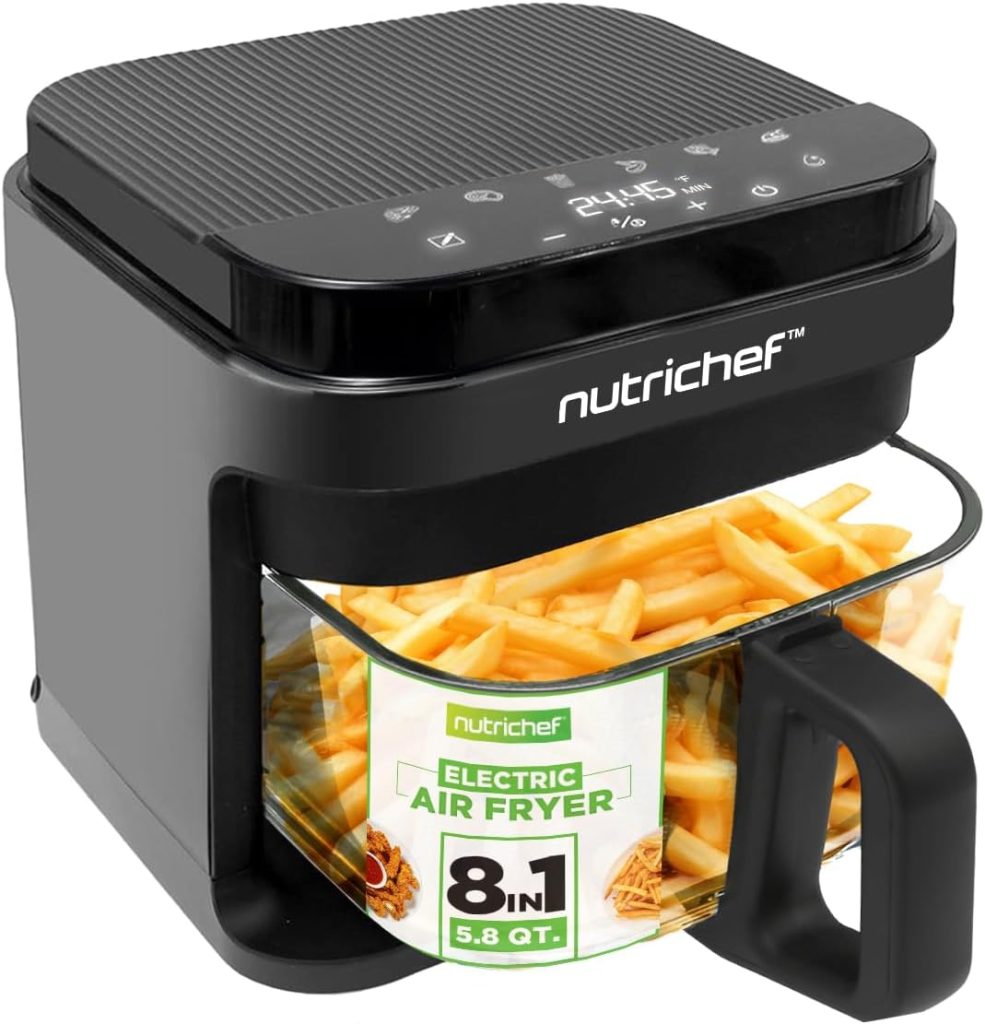
Not every glass air fryer needs a premium price tag, and the NutriChef proves it. This 5.8-quart model uses a transparent fry bowl paired with 360° hot air circulation, so you get the same “watch it cook” appeal as pricier competitors at a fraction of the cost. It runs on a 1200-watt heating element with adjustable temperature up to 390°F and a 60-minute timer, plus 8 preset cooking modes for foods like shrimp, steak, wings, and fries. It won’t out-crisp the higher-wattage models on this list, but reviewers consistently note that it delivers reliable, even results for everyday meals, and the nonstick tray and removable basket are dishwasher safe for painless cleanup.
- Pros: Budget-friendly price point, spacious 5.8-quart capacity for the cost, 8 presets cover most common meals, easy-to-clean dishwasher-safe parts
- Cons: Lower max temperature (390°F) and wattage than premium picks means slightly longer cook times; glass bowl is noticeably heavier than plastic-basket competitors
- Our Verdict: If you want to try the glass air fryer trend without committing to a premium price, this is the pick — it covers the essentials well, even if it won’t win a speed contest.
Best Rotisserie: Fritaire 9-in-1 Glass Air Fryer with Rotisserie & Tumbler
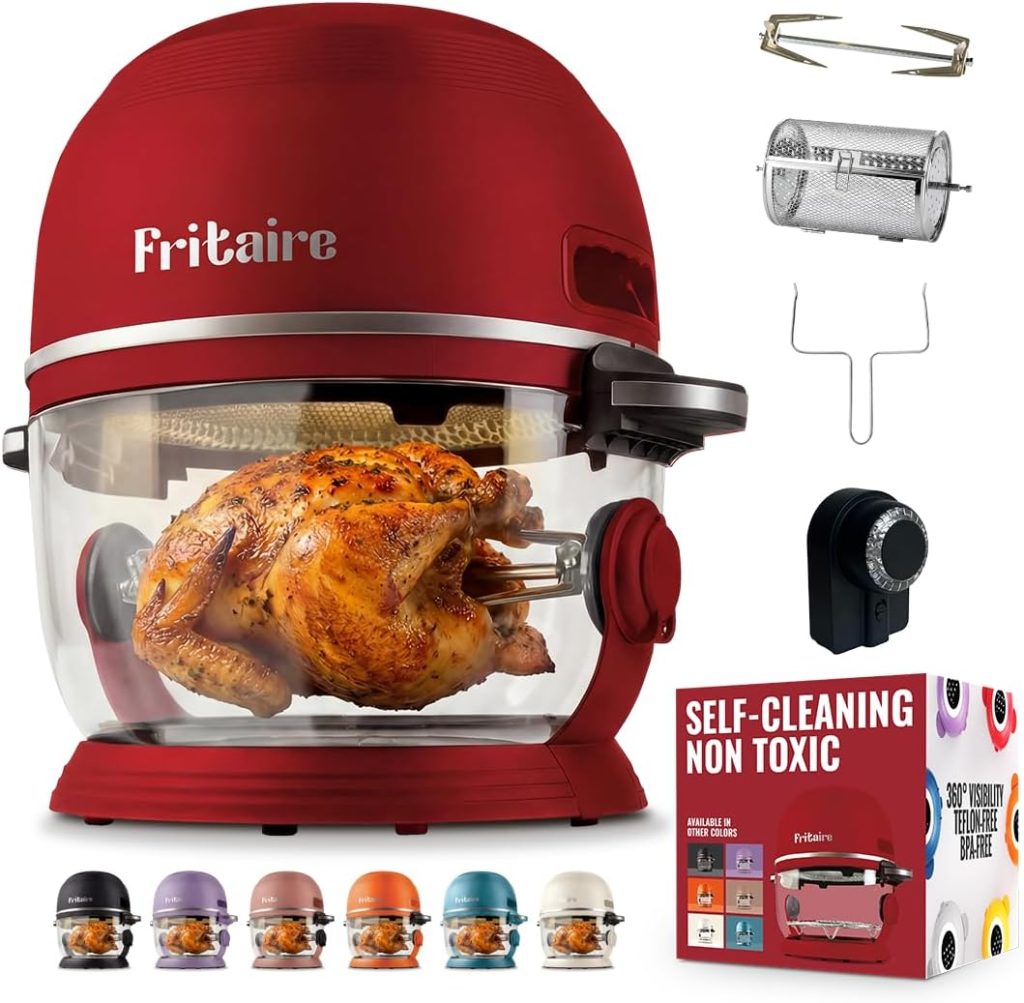
For anyone who wants restaurant-style rotisserie chicken without buying a separate rotisserie oven, this 5-quart Fritaire model is the standout. It’s one of the only glass air fryers on the market that ships with a full rotisserie skewer and a tumbling basket, letting you spit-roast a whole chicken or tumble fries and nuts for even, hands-free crisping. The full 360° glass bowl lets you watch the bird brown in real time, which matters more than it sounds — rotisserie cooking is normally hidden behind an opaque metal door. Beyond rotisserie duty, it covers 9 preset functions including air fry, bake, roast, broil, and reheat, and it has a built-in self-cleaning cycle that circulates soapy water through the bowl so you’re not stuck scrubbing baked-on grease. It’s also built without BPA, Teflon, or PFAS.
- Pros: Rare true rotisserie function with included skewer and tumbler, self-cleaning cycle, full 360° glass visibility, non-toxic materials throughout
- Cons: 5-quart capacity limits how large a chicken or roast you can fit; glass bowl itself is hand-wash only despite the self-clean feature
- Our Verdict: If rotisserie chicken is the whole reason you’re considering a glass air fryer, this is the only model on our list built specifically for that job — and it does it well.
Best Extra-Large: Granitestone 16-Quart Large Glass Air Fryer
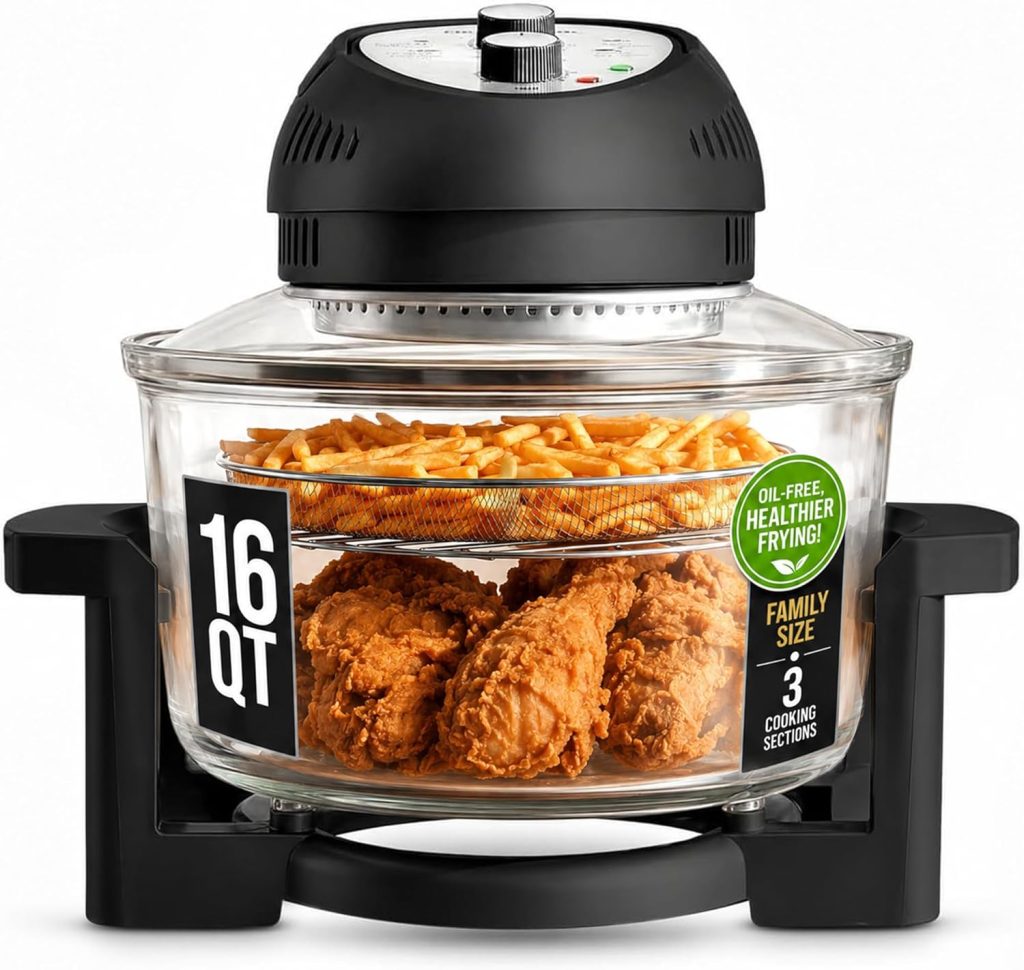
When you need to cook for a crowd, the Granitestone 16-quart model is in a different weight class entirely. Its three stacking stainless steel racks let you cook a protein, a side, and vegetables all at once instead of running multiple batches — a real time-saver on busy weeknights or holidays. A 1300-watt fan and 360° convection heat cover a wide 180°F to 400°F range, and Granitestone advertises no-preheat operation, so you can go from frozen straight to cooking. The large glass bowl is entirely Teflon-, PFOA-, and PFAS-free, and the built-in self-cleaning function combined with dishwasher-safe racks makes cleanup manageable even at this size. It comes with a recipe book to help you get the most out of the extra room.
- Pros: Massive 16-quart capacity feeds 5-6 people in one batch, three-rack design cooks multiple dishes simultaneously, no preheat required, self-cleaning function
- Cons: Large footprint takes up serious counter space; some owners note the glass bowl feels more fragile than the stainless racks it pairs with
- Our Verdict: For big families or anyone who regularly hosts, this is the glass air fryer with the room to match — just make sure you have the counter space to give it a permanent home.
Frequently Asked Questions about Glass Air Fryers
You got questions, we have answers. While product safety reigns supreme, lots of people have questions about the day-to-day factors owning this type of product. Are they easy to clean? Do they break … and how expensive are they to replace when they do? Here are some things other consumers are asking about glass air fryers, with in-depth answers to help you make an informed purchasing decision.
Are glass air fryers actually safer than traditional nonstick models?
This is the question driving most of the interest in glass air fryers, so it’s worth unpacking. The vast majority of standard air fryer baskets use a PTFE (polytetrafluoroethylene) nonstick coating — the same family of material as traditional Teflon. PTFE is itself classified as a PFAS, or “forever chemical,” even on baskets labeled “PFOA-free.” That label only means the coating was made without PFOA, a different PFAS compound used in older manufacturing processes and now phased out; it says nothing about whether PTFE itself is still present.
The current scientific consensus is that intact PTFE coatings are chemically stable at normal air-frying temperatures (generally cited as below 400–500°F). The concerns center on two scenarios: coatings that have been scratched or worn down over time, and coatings that are overheated (often cited around 500°F/260°C or higher), which can begin to degrade and release fumes. Because air fryers use a fan to circulate superheated air directly over the basket, some researchers note this may accelerate coating wear compared to a stovetop pan.
Glass and stainless steel remove this variable from the equation entirely, since neither material contains a nonstick coating that can degrade or flake. That’s the core appeal of a glass air fryer: it’s less about a proven danger from a well-maintained modern basket and more about not having to think about coating wear, scratches, or overheating at all. Worth noting: some glass-basket air fryers still pair the glass bowl with a separate ceramic-coated crisper plate or tray, so if going entirely coating-free matters to you, check the materials list for every food-contact part, not just the bowl itself.
Do glass air fryers cook food differently than metal-basket models?
Mostly not, though there are a couple of real differences. Glass retains heat differently than metal — it tends to heat up a bit more slowly but holds a more stable internal temperature once it reaches the target, according to several hands-on reviews of glass models. In practice, this can mean marginally longer preheat times, especially on lower-wattage models, but similar or even more consistent results once cooking is underway. The bigger functional upside isn’t really about crispiness — it’s visibility. Being able to watch food brown without opening the unit means less heat loss and less guessing, which several reviewers credit with more consistent results over multiple cooks.
Can the glass bowl go in the microwave, oven, or dishwasher?
It depends entirely on the model, so always check the specific product before assuming. Some glass air fryer containers — like the Ninja Crispi’s borosilicate containers — are explicitly rated as microwave, freezer, and dishwasher safe, which is part of their appeal as a prep-to-storage system. Others, including Cuisinart’s ClearView basket, are dishwasher safe but not microwave or oven safe. Some larger glass bowls, like the one on the Fritaire rotisserie model, are hand-wash only despite having a self-cleaning cycle for the interior. The lesson: “glass” doesn’t automatically mean “goes anywhere,” so read the specific care instructions for the model you’re considering.
Is the glass bowl fragile? Will it crack from heat or dropping it?
Most glass air fryer bowls are made from borosilicate or tempered glass, both of which are specifically manufactured to handle thermal shock and repeated high-heat cycles far better than ordinary glassware. That said, glass is still glass — it’s heavier than a plastic or metal basket, and a handful of user reviews across different brands mention that the bowl feels more delicate than the stainless steel components it’s often paired with, or that it takes two hands to remove safely once it’s hot. If you’re prone to dropping kitchen gear or have limited grip strength, this is worth factoring in, and it’s part of why some brands include a rack or trivet to protect both the bowl and your countertop.
What size glass air fryer do I actually need?
As a rough guide: 4 quarts or a small pod-style container suits one to two people and everyday sides or snacks; 5 to 6 quarts covers most small families or anyone who wants to cook a whole chicken without much extra room; and 9 quarts and up is where you want to be for regular family dinners, meal prepping, or entertaining. If you often cook multiple components of a meal at once, look specifically for a model with multiple internal racks (like the extra-large pick above) rather than just a bigger single-chamber bowl, since capacity alone doesn’t guarantee you can cook more than one dish at a time.
Do glass air fryers use more electricity than regular air fryers?
Not inherently — wattage is a function of the heating element and fan, not the basket material. You’ll find glass models across a wide wattage range (roughly 1200 to 1800 watts in this guide), similar to conventional metal-basket air fryers. Higher wattage generally means faster preheating and better heat recovery when you open the unit, but it doesn’t dramatically change your electricity bill given the relatively short, intermittent cook times typical of air frying.